The minimum wage rises to £13.21: three conversations companies will be having.
The minimum wage rises 3.9% to £13.21 in April. Take-home rises £58.50 a month, prices take £61, and employers pay £96 more. What it means for pay budgets.
So budget time again!
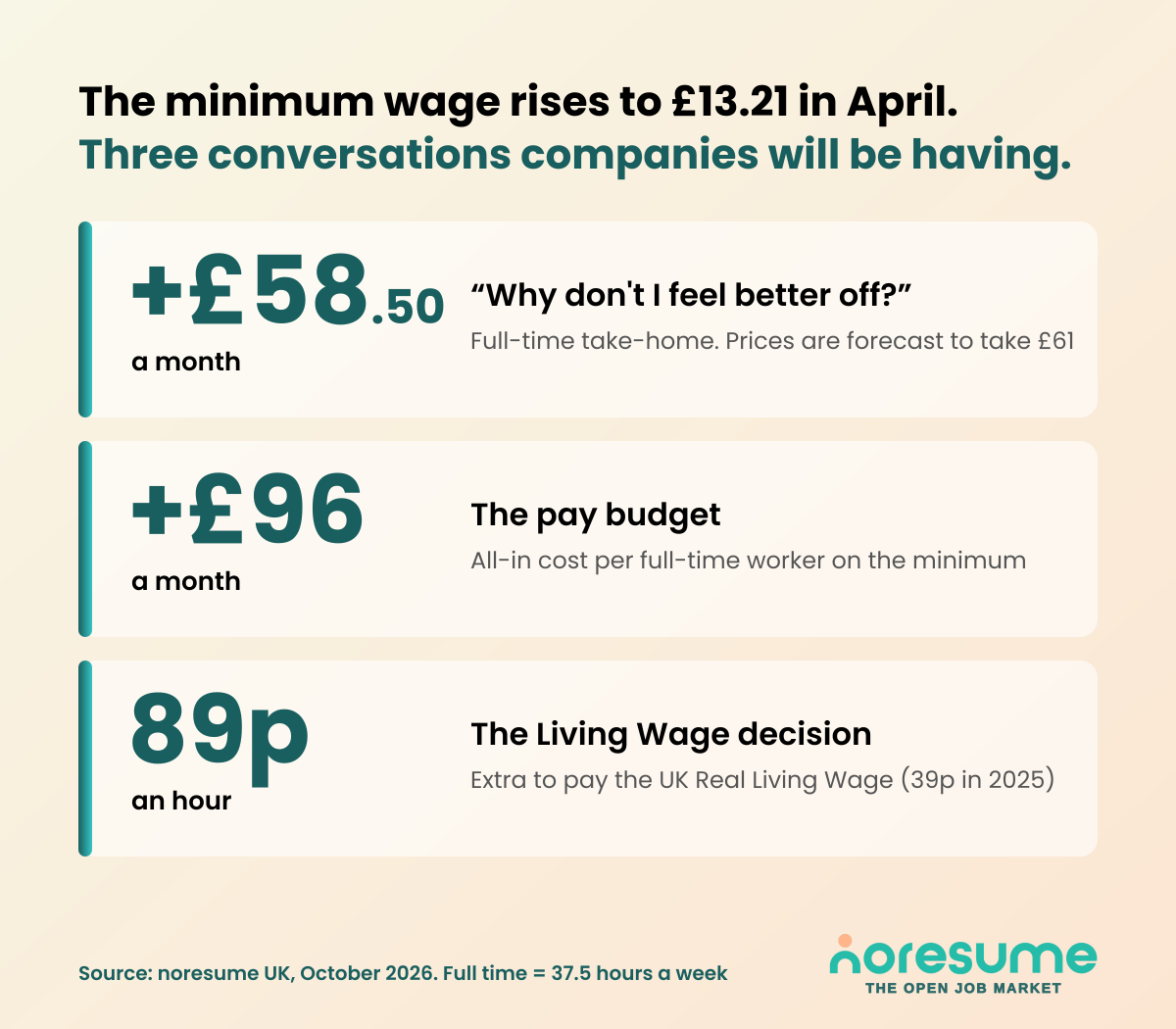
Yesterday’s Budget set the new minimum wage at £13.21 an hour from April. That is a 3.9% rise, but for companies it’s more than one number. Here are three conversations that are coming.
First, a full-timer’s take-home pay after tax rises by £58.50 a month (37.5 hr), but prices are forecast to take £61. The tax-free allowance remaining frozen is the killer here… so more of the rise goes in tax.
Second, the all-in cost of one full-time worker on the minimum, including employer NI and pension, rises by £96 a month, about £1,150 a year. And that’s before the challenging decision of whether to lift everyone above them to keep the gaps.
Third, the UK Real Living Wage decision. The gap between the legal minimum and the voluntary UK Real Living Wage will be 89p an hour from April, more than double the 39p of 2025 and the widest since 2018.
And the ripple effect. With the 40% tax threshold also frozen, more managers and senior staff get pulled into higher tax on their next rise.
So the question is, do you pass 3.9% across the board, or just lift the bottom?
First posted on LinkedIn.